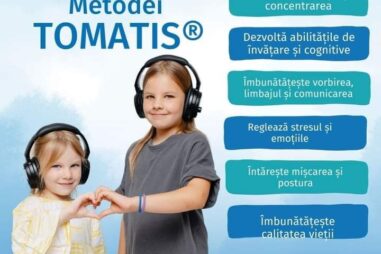
🎵 The Tomatis Method offers a series of internationally recognized benefits, especially for children and adults facing ‼️ speech and communication difficulties, learning challenges, and personal development issues.‼️
1. Improved attention and concentration:
The method helps stimulate active listening and attention, thus contributing to better focus and task engagement.
2. Development of language and communication skills:
Through specific auditory stimulation, the method improves pronunciation, vocabulary, fluency, and language comprehension.
3. Reduction of stress and anxiety:
The technique promotes relaxation and balances the nervous system, which can help reduce stress and anxiety in various situations.
4. Stimulation of social skills:
By enhancing listening and communication abilities, users of the method may experience improved social interactions and relationship-building skills.
5. Improvement of motor skills:
The method stimulates both fine and gross motor coordination, positively impacting balance, posture, and overall body movement.
6. Support of cognitive development:
By stimulating the auditory system and activating certain brain areas, the method can enhance cognitive functioning, including memory and problem-solving skills.
7. Enhanced learning ability:
Users often show improved information absorption, reading and writing skills, and foreign language acquisition.
8. Stimulation of creativity and musical skills:
The method may improve rhythm, intonation, and sensitivity to musical sounds.
9. Development of emotional balance:
By directly influencing the auditory and nervous systems, the method helps regulate emotions and improves emotional responses.
🎧 What is Tomatis Therapy and How Does It Help?
1. What is the Tomatis Therapy?
Tomatis Therapy is a neuro-sensory integration program developed and used over the past 50 years by French physician Alfred Tomatis. Through his research and experience, Dr. Tomatis studied the role of the ear in perception, communication, and listening-related disorders. His work led to the development of a new science, called audio-psycho-phonology, and an innovative intervention therapy.
2. What are the effects of the Tomatis Method?
Patients exposed to high-frequency processed music and vibrations have shown improvements in psychological, behavioral, and physiological areas. They reported increased energy, better attention, memory, psychomotor reactions, and reduced learning difficulties.
Case studies show a common issue among beneficiaries: poor listening ability. According to Dr. Tomatis, listening problems not caused by medical conditions of the inner ear or the nervous system may have psychological origins.
3. What does the therapy involve?
This innovative method uses the therapeutic effect of sound, especially filtered and compressed music by Mozart and Gregorian chants, to retrain the ear and restore natural listening. The method uses a specific electronic device called the Electronic Ear, which enables the ear to correctly analyze the full range of human-perceivable frequencies.
The music is progressively filtered up to 8000 Hz. Special headphones deliver sound both through air conduction and bone conduction (via cranial bones). The result is deep relaxation and both physical and mental revitalization.
4. “Hearing” or “Listening”?
Hearing and listening are two different actions:
- Hearing is a sensory process – converting acoustic energy into auditory sensations and transmitting them to the brain.
- Listening is a mental process – involving conscious participation, understanding thoughts and emotions, confirming meaning, and responding appropriately.
Tomatis Therapy focuses on listening, an active perception of sounds. It mobilizes attention and perception in the listening process.
5. What does a session look like?
Tomatis sessions consist of 1 to 2 hours of musical listening per day, delivered via the Electronic Ear through headphones.
What the client hears is Mozart’s music filtered with specific high frequencies, gradually shifting to lower frequencies. The music might occasionally contain metallic or dissonant sounds that fade as the client becomes accustomed to them.
6. What can the client do during therapy?
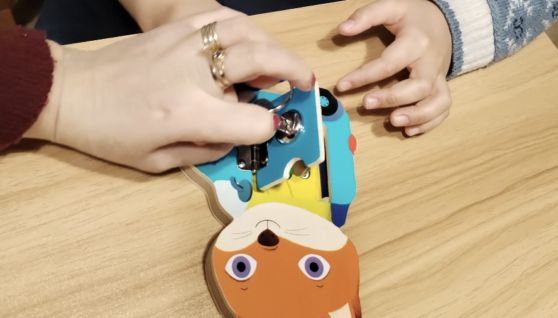
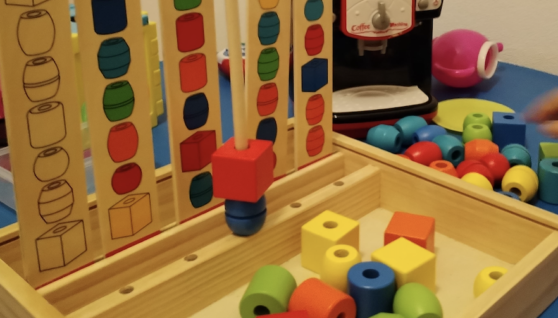
During sessions, children are encouraged to draw, solve puzzles, paint, play, speak softly, or engage in sensory integration activities.
Adults can listen attentively to the music, read, or even rest/sleep. However, it’s ideal to focus as much as possible on the music being played.
7. Why is it effective?
It is well known that sound waves affect the human body differently depending on frequency.
Low-frequency sounds impact the vestibular system (responsible for coordination and balance), as sounds we can’t hear can still be felt.
🧠 Tomatis Therapy and Cognitive Health – including Alzheimer’s
As humans, our ability to communicate, acquire knowledge, remember, and more depends on our cognitive functions, such as:
- Intellectual and executive functions
- Language functions
- Memory
- Attention
- Information processing speed
Major cognitive impairments affect autonomy and daily life management. Causes include:
- Traumatic brain injuries
- Strokes
- Malnutrition or eating disorders
- Depression
- Multiple sclerosis
Tomatis Therapy finds ways to establish new neuronal connections, promoting balanced and harmonious brain function. It enhances cognitive performance, self-confidence, focus duration, and sustained attention.
For elderly individuals, it serves well as a preventive or stabilizing therapy for Alzheimer’s disease.
Research shows that Tomatis Therapy activates brain regions unaffected by Alzheimer’s through the combination of headphone music and vibrations.
Studies have shown that music activates the brain, boosting communication across entire regions. Listening to personal soundtracks resulted in significantly stronger connectivity in:
- Visual network
- Executive network
- Cerebellar and cortico-cerebellar networks
🏅 Tomatis Therapy for Athletes
Because the Tomatis Method stimulates the entire brain, its effects on athletes are profound and long-lasting.
From the inner ear – which governs balance, movement coordination, laterality, spatial awareness – to emotional areas like the amygdala, the method improves memory, focus, and sustained attention.
Tomatis Therapy can be seen as a comprehensive tool for present and future athletic development, ensuring the neuroplasticity needed for lasting change at cognitive, emotional, and behavioral levels.
It specifically targets:
- Supporting motivation toward performance goals
- Identifying and analyzing behaviors that hinder performance
- Assisting in setting realistic and achievable performance levels
- Providing psychological support during pre-competition and competition training phases
- Enhancing cognitive abilities for better coping strategies and stress resilience
- Promoting self-discipline and emotional control
- Developing techniques for managing pressure, stress, and anxiety during competitions
Alte servicii